
The Utah Blowout
On Saturday night, September 12, 2026, the Razorbacks were overmatched in Salt Lake City. Utah rolled to a 43-10 victory, scoring 43 unanswered points after Arkansas’s early field goal. The Utes built a 29-3 half-time lead behind quarterback Devon Dampier’s efficiency and running back Wayshawn Parker’s three first-half touchdowns.
Arkansas managed just 61 rushing yards, saw starting quarterback KJ Jackson struggle, and failed to sustain drives after the opening possession. First-year head coach Ryan Silverfield called the performance clearly not good enough across all three phases and said the team was “pissed.” It was Silverfield’s first loss and one of the more lopsided defeats of his career.
A Pattern of Underachievement
The result fits a longer arc of underachievement during Yurachek’s tenure as athletic director. Arkansas has struggled mightily in football since he took over, with multiple seasons of four or fewer wins and repeated bottom-of-the-SEC projections. Yurachek inherited Chad Morris, fired him after two seasons of collapse, then hired Sam Pittman. Pittman’s early promise faded into mediocrity and a 2-10 campaign that ended with his midseason dismissal in 2025.
Interim Bobby Petrino could not reverse the slide. Yurachek’s subsequent search produced Silverfield, the Memphis coach whose hiring drew immediate fan protests, “Fire Yurachek” signs, and widespread skepticism that the program lacked direction and competitive resources.
Coaching Hire Failures
Critics point to a consistent inability to land or retain elite coaches and staff. The Silverfield hire followed a lengthy process in which Yurachek said he spoke with dozens of coaches, yet the choice of a Group of Five coach with limited Power conference success was widely viewed as underwhelming for an SEC job.
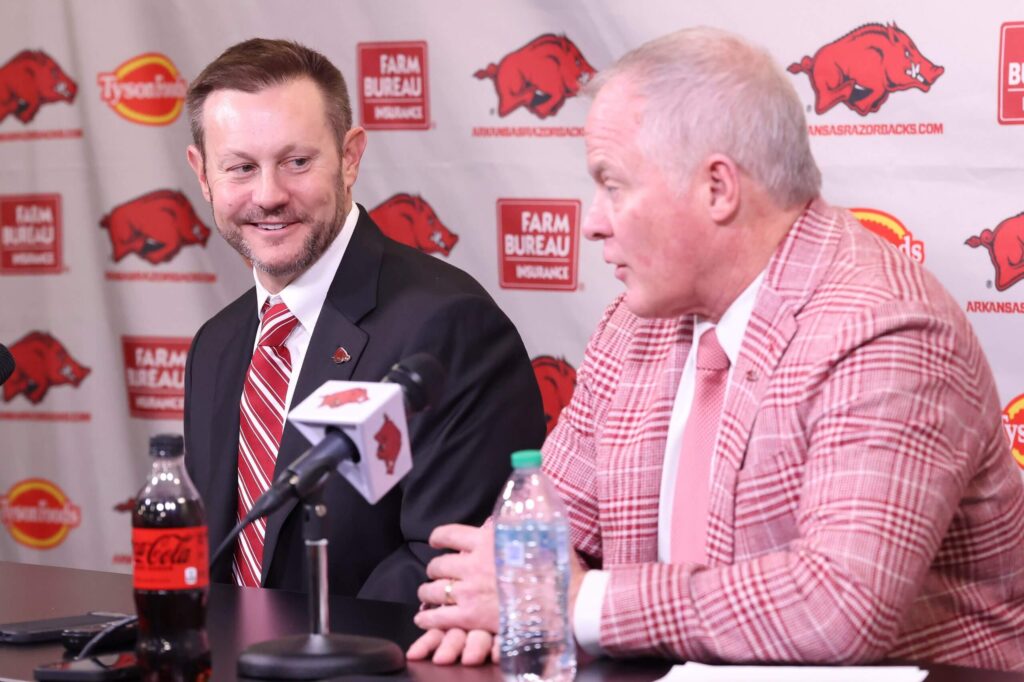
Assistants have often come from Silverfield’s Memphis circle rather than proven SEC risers. Broader department decisions—staff cuts tied to revenue-sharing economics, tennis program eliminations, and public comments that football was not set up to win a national championship—have fueled the perception that Yurachek prioritizes fiscal caution over aggressive investment in the sport that drives the department. Fan and media reaction after Utah included pointed calls for the Board of Trustees to reconsider his leadership.
The Malzahn Contrast
The timing sharpens the contrast with Gus Malzahn’s appearance at the Little Rock Touchdown Club earlier this week. The Fort Smith native and former high-school, Arkansas State, Auburn, and UCF coach (most recently Florida State’s offensive coordinator before retiring) spoke on September 8. Malzahn, who had been among those interviewed by Yurachek during the post-Pittman search, offered measured optimism:
“If Indiana can win a national championship, the Arkansas Razorbacks can win a national championship.” He urged patience with the new staff while recounting his own Arkansas ties and career path. Yurachek himself declined an invitation to appear at the club this fall.
The optics—an Arkansas coaching legend publicly affirming the program’s potential days before a humiliating road loss under the coach Yurachek ultimately chose—highlight the gap between aspiration and current results.
Looking Ahead
Yurachek’s defenders note non-football success (men’s basketball hires of Eric Musselman and John Calipari, strong Directors’ Cup finishes in other sports) and the structural challenges of the NIL and revenue-sharing era. Yet football remains the primary revenue engine and cultural centerpiece in Arkansas.
The Utah blowout, coming on the heels of an underwhelming coaching search and years of middling results, has intensified scrutiny of whether the athletic director’s vision and hiring track record can reverse a decade-plus of gridiron drift. Silverfield and his staff now face Georgia next, with little margin for error and a fan base already questioning the leadership that put them there.
Leave a Reply